Wine Storage Systems

Wine Cooler Repair for Luxury Homes in NYC

Proper wine storage depends on stable temperatures and humidity. This page targets premium wine refrigeration repair demand.

Sub-Zero wine cooler and undercounter refrigerator repair service in NYC

Typical Wine Cooler Problems

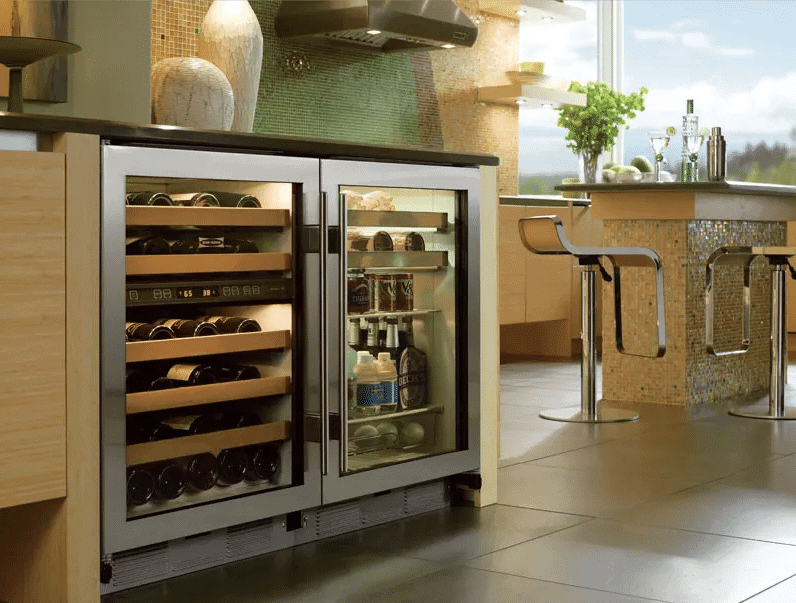
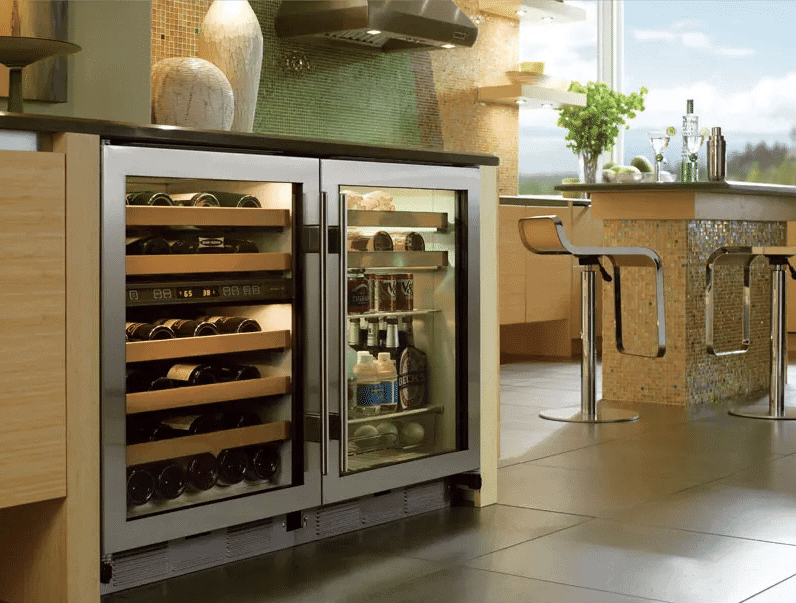
Sub-Zero undercounter wine cooler and beverage center repair service in NYC – dual-zone temperature controlled wine storage
  • Dual-zone mismatch and erratic temperature swings.
  • Compressor short cycling and excess noise.
  • Condensation and humidity control instability.
  • Panel alerts, sensor drift, or thermostat faults.
  • Door seal wear causing thermal loss.

Sub-Zero Wine Storage Units: UW Series, Designer Series, and Wine Column Repair

Sub-Zero wine storage systems are engineered with the same dual-compressor philosophy that distinguishes their refrigerators, but adapted specifically for the narrow temperature ranges and low-vibration requirements essential to proper wine preservation. The Sub-Zero UW series undercounter wine units, including the UW-24 and UW-30 models, fit beneath standard countertops and offer dual independent temperature zones for simultaneously storing reds and whites at their ideal serving temperatures. These units use a dedicated compressor for each zone, which means a failure in one compressor affects only that zone while the other continues operating normally. Our NYC technicians diagnose UW series compressor issues by monitoring each system's suction and discharge pressures independently, checking the start relay and overload protector on the suspect compressor, and evaluating the thermistor that feeds temperature data to the zone control board.

The Sub-Zero Designer series wine storage units, such as the DET3050W and DEU2450W, are designed for seamless integration into custom cabinetry with panel-ready door fronts and flush-mount hinges. These units feature Sub-Zero's UV-resistant glass door with a low-emissivity coating that blocks harmful light wavelengths while still allowing the collection to be displayed. When the Designer series develops condensation between the glass door panes, it typically indicates a failure of the perimeter seal that maintains the inert gas fill between the glass layers. Our technicians can replace the complete door glass assembly with an OEM unit that restores the insulating properties and UV protection.

The Sub-Zero wine column series, including the BW-30 and IW-30 models, represents the brand's largest capacity wine storage in a single unit, holding up to 146 bottles across multiple temperature zones. These column units mount in tall cabinet openings and require precise ventilation provisions due to the significant heat output of their compressor systems. In Manhattan penthouses and renovated brownstones where these columns are popular, we frequently encounter installations where the builder did not provide adequate air circulation behind or above the unit, leading to compressor overheating and premature failure. Our service includes a thermal assessment of the installation environment and recommendations for improving airflow within the cabinetry surround.

Thermador Wine Columns and Integrated Beverage Center Service

Thermador's wine column line, including the T18IW and T24IW models, offers a columnar design that can be installed alongside Thermador Freedom Collection refrigerator and freezer columns to create a fully integrated cooling wall. These units feature SoftClose hinged glass doors, LED theater lighting that illuminates the shelves without generating UV radiation, and electronic controls with a digital temperature display accessible from the exterior. When the electronic control system malfunctions, the unit may display temperature readings that do not correspond to the actual zone temperature, or it may fail to respond to adjustment commands. Our technicians access the Thermador diagnostic mode through a specific control panel button sequence to read stored error codes, test the thermistor circuit values, and verify the control board's relay outputs to the compressor and fan circuits.

Thermador's integrated beverage centers, designed for storing non-wine beverages at slightly higher temperatures, share many components with the wine column platform but have different thermostat setpoint ranges and shelf configurations. Common service calls for Thermador beverage centers involve the interior LED lighting flickering or failing due to a driver board fault, the door gasket losing its seal due to the weight of the glass door pulling the hinge alignment out of specification, and the condensate evaporation tray overflowing because the drain path from the evaporator is partially blocked with mineral deposits. Our technicians carry LED driver boards, gaskets, and drain cleaning tools for these Thermador units, allowing most repairs to be completed during the initial visit without a parts-ordering delay.

Temperature Zone Instability and Compressor Cycling Issues in Wine Coolers

Wine requires storage within a narrow temperature window, typically 45 to 65 degrees Fahrenheit depending on the varietal, and fluctuations of even a few degrees can accelerate aging and degrade the wine's character. When a wine cooler's temperature zone becomes unstable, swinging above and below the setpoint rather than maintaining a steady state, the root cause often lies in the thermostat sensor, the control board's temperature regulation algorithm, or the compressor cycling pattern. A properly functioning wine cooler compressor runs in long, gentle cycles that gradually bring the zone to the setpoint and then maintain it with minimal variation. Short cycling, where the compressor starts and stops every few minutes, indicates a problem such as a dirty condenser causing elevated head pressure, a low refrigerant charge causing the low-pressure cutoff switch to trip, or a faulty start relay that intermittently loses contact.

Our technicians measure the actual air temperature inside the wine cooler at multiple points using precision digital thermometers while simultaneously monitoring the compressor duty cycle to establish a performance baseline. If the temperature variation exceeds the manufacturer's specification, typically plus or minus two degrees for premium units, we systematically evaluate the thermostat sensor placement, the insulation integrity of the cabinet walls and door, the condenser cleanliness, the evaporator fan operation, and the refrigerant charge. On dual-zone units, we check for cross-contamination between zones, which can occur when the air barrier between the upper and lower zones develops gaps or when the zone damper does not seal fully when one zone reaches its setpoint.

Humidity Control, UV-Protected Glass Door Service, and Vibration Dampening

Proper humidity levels inside a wine cooler, ideally between 50 and 80 percent relative humidity, prevent corks from drying out and shrinking, which would allow air to enter the bottle and oxidize the wine. Premium wine coolers from Sub-Zero and Thermador manage humidity through the natural byproduct of the cooling cycle: as the evaporator coil cools the air, moisture condenses on the coil surface and drips into a collection tray, but the system is designed to cycle in a way that prevents excessive moisture removal. When humidity drops below acceptable levels, possible causes include an evaporator fan that runs continuously rather than cycling with the compressor, a door gasket leak that allows dry ambient air to enter the cabinet, or an overly aggressive defrost cycle that removes too much moisture from the air. Our technicians measure the interior humidity with a calibrated hygrometer and adjust the system parameters to restore the optimal moisture balance for long-term wine storage.

The UV-protected glass doors on premium wine coolers serve both an aesthetic and a protective function. Ultraviolet light accelerates the chemical reactions that break down tannins and other compounds in wine, leading to premature aging and off flavors. The glass door assemblies used by Sub-Zero and Thermador feature multiple panes with a low-emissivity coating and an argon or krypton gas fill between the panes for insulation. When the gas seal fails, condensation forms between the panes, obscuring the view and reducing the insulating value. We replace failed glass door assemblies with factory-original units that restore both the UV protection and the thermal insulation properties.

Vibration is the enemy of proper wine storage. Even subtle vibrations from a compressor, a fan motor, or external sources like building mechanical systems can disturb the sediment in aging wines and disrupt the maturation process. Sub-Zero wine storage units incorporate vibration-dampening compressor mounts and rubber-isolated shelf systems to minimize transmitted vibration. When a wine cooler begins producing more vibration than usual, our technicians inspect the compressor mounting grommets for deterioration, the shelf slides for loose hardware, and the unit's leveling feet for proper floor contact. We also evaluate external vibration sources such as adjacent dishwashers, laundry equipment, or HVAC components that may be transmitting vibration through the floor or cabinetry into the wine cooler.

Common Wine Cooler Repairs: Thermostat, Fan Motor, and Compressor Relay Service

Thermostat calibration issues are among the most frequently reported problems with premium wine coolers. The thermostat sensor, typically an NTC thermistor mounted inside the storage compartment, sends a resistance signal to the control board that corresponds to the current temperature. As the thermistor ages or is exposed to moisture, its resistance curve can drift, causing the control board to read the temperature higher or lower than reality. This drift results in wine being stored at incorrect temperatures, potentially ruining valuable bottles over weeks or months before the owner notices. Our technicians verify thermistor accuracy by comparing its resistance reading at a known temperature against the manufacturer's resistance-temperature chart, and we replace any sensor that deviates beyond the allowable tolerance.

The evaporator fan motor in a wine cooler circulates cold air from the evaporator coil throughout the storage compartment. Unlike a standard refrigerator fan that simply needs to move air, a wine cooler fan must operate quietly enough to avoid disturbing the storage environment and gently enough to avoid creating temperature differentials between bottles stored at different positions. When the fan motor develops bearing wear, it produces a whining or clicking noise that can be audible in a quiet kitchen or dining area. We replace worn fan motors with OEM units that match the original RPM and noise specifications, and we verify the replacement motor's airflow direction to ensure proper circulation patterns within the cabinet.

The compressor relay, also called the start device, is a small but critical component that provides the initial electrical boost the compressor motor needs to start against the refrigerant pressure in the system. When the relay fails, the compressor hums for a few seconds and then shuts off as the overload protector trips, repeating this cycle every few minutes. This produces a distinctive click-hum-click pattern that is often the first symptom a homeowner notices. Our technicians test the relay with a multimeter, inspect the contacts for pitting or carbon buildup, and replace the relay with the correct OEM part specified for the compressor model installed in the unit. Using an incorrect relay can cause compressor damage due to improper starting characteristics.

Wine Cooler Diagnostic Reference Table

Symptom Potential Causes Diagnostic Method Repair Approach
Wine cooler not cooling at all Compressor relay failure, overload protector tripped, control board not sending run signal, power supply issue Listen for click-hum-click cycle, test relay continuity, check board relay output, verify incoming voltage Replace start relay and overload, repair or replace control board, resolve power supply fault
One temperature zone warm, other zone normal Zone compressor failure (dual compressor units), zone damper stuck closed, zone thermistor failed Check compressor operation for the affected zone, test damper motor, read thermistor resistance Replace zone compressor, damper actuator, or thermistor as identified
Temperature swings more than 3 degrees Dirty condenser causing short cycling, door gasket air leak, thermistor drift, low refrigerant Monitor compressor duty cycle, test gasket seal, verify thermistor accuracy, check suction line temperature Clean condenser, replace gasket, recalibrate or replace thermistor, repair refrigerant leak
Condensation on glass door exterior Door heater failure (anti-condensation heater), high ambient humidity, gasket not sealing Test door heater continuity, measure ambient humidity, inspect gasket for gaps Replace door heater element, improve room ventilation, replace door gasket
Excessive noise or vibration Worn compressor mounts, fan motor bearing failure, loose shelf hardware, contact with adjacent cabinetry Isolate noise source, check compressor grommets, spin fan by hand, inspect shelf slides and leveling feet Replace compressor mounts, fan motor, tighten hardware, adjust unit position within cabinet
Condensation between door glass panes Failed perimeter seal allowing gas fill to escape, cracked glass pane Visual inspection for seal breach, check for cracks with flashlight at oblique angle Replace complete glass door assembly with OEM unit

NYC Wine Collectors: Consistent Temperature in Apartment Environments

New York City is home to some of the most serious private wine collections in the country, and many of these collections are stored in apartment wine coolers rather than dedicated climate-controlled cellars. The apartment environment presents specific risks to wine storage that collectors must be aware of. Kitchen temperatures in NYC apartments can fluctuate significantly depending on cooking activity, seasonal HVAC changes, and the building's overall climate control system. A wine cooler positioned near a dishwasher, oven, or south-facing window may experience ambient temperatures that exceed the unit's design parameters, forcing the compressor to run extended cycles and potentially failing to maintain the setpoint during peak summer heat. Our technicians assess the thermal environment surrounding the wine cooler and recommend optimal placement and, where necessary, supplemental insulation or ventilation improvements to maintain consistent storage conditions.

Power reliability is another concern for NYC wine collectors. Building power outages, whether from grid failures, construction-related shutdowns, or building electrical maintenance, can leave wine coolers without power for hours or even days. During a prolonged outage, the temperature inside the wine cooler rises gradually, and once it exceeds the acceptable range, the wine begins to deteriorate. While we cannot prevent power outages, our technicians can advise on battery backup options for critical wine storage units and can verify that the unit resumes normal operation promptly after power is restored, with all temperature settings intact and the compressor starting without relay issues.

Frequently Asked Questions: Wine Cooler Repair in NYC

How do I know if my Sub-Zero wine cooler compressor is failing?

Early signs of compressor failure in a Sub-Zero wine cooler include the unit running for longer periods without reaching the set temperature, a gradual increase in the temperature displayed on the control panel, a clicking or buzzing noise coming from the rear of the unit as the relay attempts to start the compressor, and the compressor feeling unusually hot to the touch on the housing surface. If you notice any of these symptoms, it is important to have the unit evaluated promptly, because a struggling compressor can cause the wine to be stored at improper temperatures, potentially damaging your collection before a total failure occurs.

Why is there condensation forming on the outside of my wine cooler glass door?

External condensation on a wine cooler glass door is caused by warm, humid ambient air contacting the cold glass surface. This is particularly common in NYC apartments during summer months when humidity is high. Most premium wine coolers include a low-wattage anti-condensation heater embedded in the door frame that warms the glass just enough to prevent condensation. If this heater fails, condensation will form even at moderate humidity levels. Our technicians test the heater circuit and replace it if necessary, restoring a clear view of your collection.

Can vibration from my wine cooler's compressor damage my wine?

Yes, sustained vibration can disturb the sediment in aging wines and accelerate chemical reactions that degrade wine quality over time. Sub-Zero and Thermador wine coolers are designed with vibration-dampening mounts to minimize compressor vibration, but these mounts can deteriorate with age. Additionally, if the wine cooler is installed adjacent to a vibration source like a dishwasher or laundry unit, external vibration can transfer through the cabinetry. Our technicians replace worn mounts and evaluate the installation environment to ensure your wine storage is as vibration-free as possible.

What temperature should I set my wine cooler to for a mixed collection?

For a mixed collection of reds and whites, a dual-zone wine cooler is ideal. Set the upper zone to 50-55 degrees Fahrenheit for white wines, champagnes, and roses, and the lower zone to 58-65 degrees for red wines. If you have a single-zone unit, 55 degrees is a reasonable compromise for a mixed collection. Our technicians can verify that your wine cooler's thermostat is accurately calibrated to the displayed temperatures, ensuring your collection is stored at the intended conditions rather than at whatever temperature the drifted sensor happens to produce.

How often should I have my wine cooler professionally serviced?

We recommend annual professional service for wine coolers in NYC apartments. During a maintenance visit, our technicians clean the condenser coils, verify the thermostat calibration, inspect the door gasket and anti-condensation heater, check the compressor operation and refrigerant charge, and evaluate the vibration damping. In dusty apartment environments or units located near cooking areas, semi-annual condenser cleaning is advisable. Regular maintenance extends the life of the compressor, maintains accurate temperature control, and protects the value of your wine collection.

Client Testimonial: Wine Cooler Repair for a Manhattan Collector

"I have a Sub-Zero BW-30 wine column storing over 140 bottles, including several cases of vintage Bordeaux. When I noticed the upper zone was reading three degrees warmer than the setpoint, I called NYC Sub-Zero & Viking immediately. Their technician arrived the next morning, identified a drifted thermistor in the upper zone, and replaced it with a genuine Sub-Zero part. He also cleaned the condenser and checked the compressor performance on both zones. The temperatures have been rock-steady ever since. For anyone in Manhattan with a serious wine collection, this is the only service team I would trust."

-- Richard D., Central Park South, Manhattan

Customer Reviews

★★★★★

"Sub-Zero wine column was fluctuating 10 degrees. Compressor cycling issue plus a failing thermistor. Both replaced, and my collection is safe at exactly 55°F."

Greg A. — SoHo, Manhattan

★★★★★

"Thermador wine cooler stopped cooling entirely one summer night. Emergency call, tech came same evening. Bad start relay. Fixed within an hour."

Christine P. — White Plains, NY

Protect Your Wine Collection With Expert Wine Cooler Repair

Your wine collection deserves the same level of care and expertise as any other valuable asset. Whether you need Sub-Zero wine column compressor service, Thermador wine cooler thermostat calibration, or routine maintenance to keep your unit operating within optimal parameters, our factory-trained technicians deliver precise, knowledgeable service throughout Manhattan and the greater NYC metro area.